

Community Spotlight: Designing Safer Emergency Care Through Lived Experience: Franci Sterzner
About the Founder
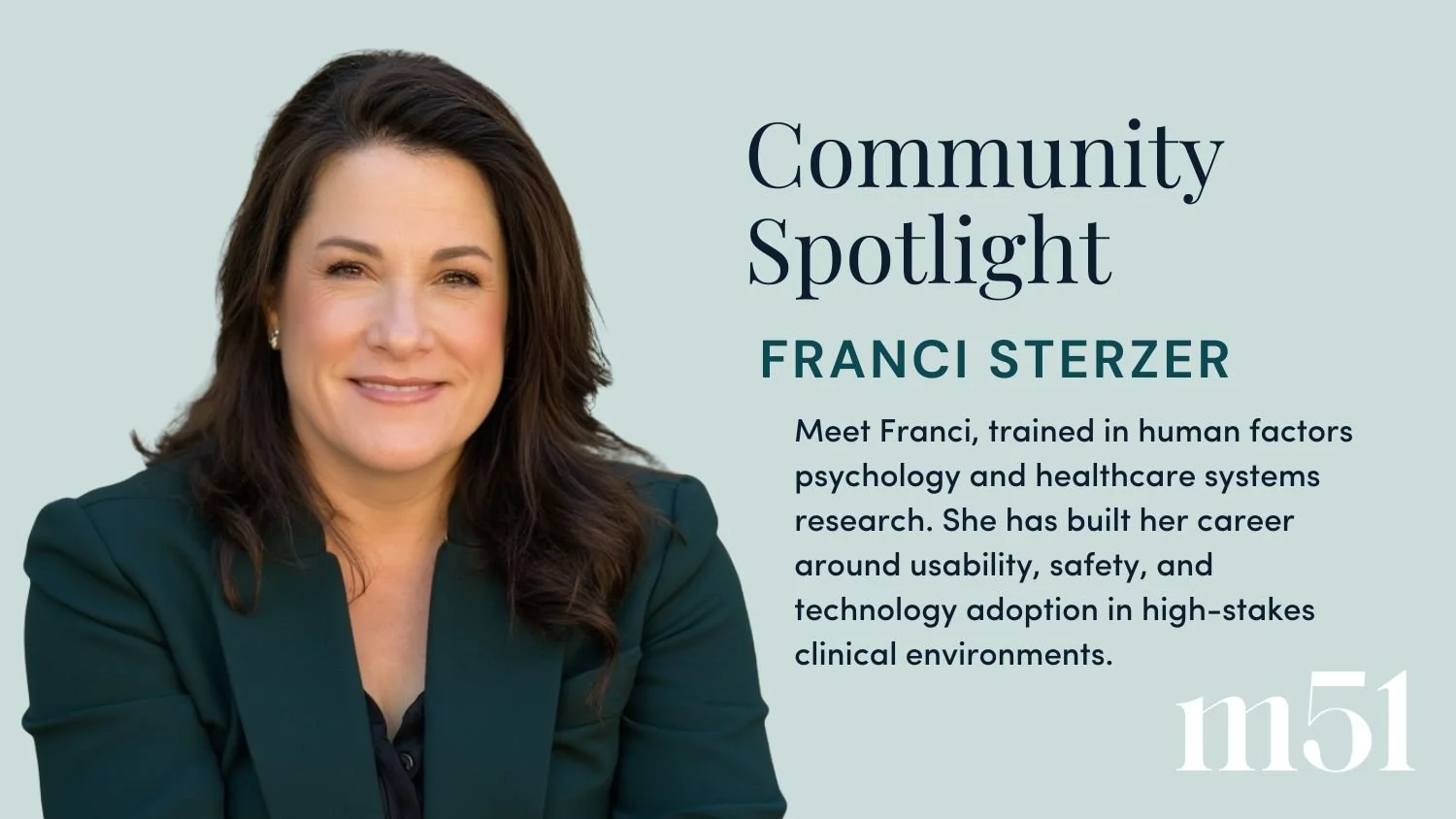
Franci Sterzer’s work is grounded in precision, evidence, and firsthand knowledge of what happens when systems fail under pressure. Trained in human factors psychology and healthcare systems research, she has built her career around usability, safety, and technology adoption in high-stakes clinical environments. As a woman working across research, emergency medicine, and technology, she leads with clarity and rigor, grounding decisions in frontline reality rather than theory.
The Moment That Changed Everything
After a car accident, Franci became quadriplegic following a breakdown in communication between Emergency Medical Services and the receiving emergency department that contributed to a missed spinal cord injury. The experience reshaped her life and career. It revealed how fragile transitions of care can be and how devastating the consequences are when critical information does not move with the patient. It also reinforced the importance of designing systems that reflect how people work under pressure.
Building SyncMed Technologies
Franci is the CEO and Co-Founder of SyncMed Technologies, a digital communication platform connecting Emergency Medical Services directly with Emergency Departments in real time. SyncMed grew out of years of applied research and cross-disciplinary collaboration. Built with paramedics, emergency nurses, physicians, researchers, and technologists, the platform is grounded in real clinical workflows. Its purpose is straightforward. Ensure essential patient information is communicated before arrival, when clarity and timing can have far reaching outcomes.
What Makes the Approach Different
SyncMed is clinician-led, research-driven, and designed for Canadian healthcare systems. The platform integrates with existing infrastructure and respects how EMS and ED teams already operate. Usability, awareness of cognitive load, and implementation science are embedded in the platform. For Franci, this reflects both her research training and her experience working in systems that have often been designed without diverse perspectives in mind.
Recent Progress and What’s Ahead
Over the past year, SyncMed has moved from research and validation into active product development and pilot preparation. The team is currently preparing for an Alberta pilot with Alberta Health Services and the University of Calgary, while advancing AI-enabled features through academic research partnerships. Non-dilutive funding has supported development, and the platform is now production-ready. SyncMed’s near-term focus is launching pilot deployments and preparing for a pre-seed raise to support scale.
Longer term, Franci sees an opportunity to standardize EMS-to-ED communication across regions and provinces, with expansion into adjacent care-transition use cases once validated.
Navigating Complexity as a Founder
Building within public healthcare means navigating long sales cycles, complex procurement processes, and system-level adoption challenges. Franci has done so by leading with credibility, patience, and precision. She stays closely aligned with health-system priorities, data governance requirements, and frontline realities, prioritizing trust and evidence over speed.
Reflections and Advice
When asked what she would do differently in her career journey, Franci says she would have embraced change earlier and with less self-judgment. In complex systems, adaptation is not a weakness but a form of leadership. One of the most persistent misconceptions about entrepreneurship, she believes, is that founders must have everything figured out from the start. Instead, clarity comes through iteration, feedback, and exposure to real constraints.
Her advice to women navigating funding, growth, or leadership is to choose alignment over speed. The right partners matter more than fast capital. Sustainable leadership comes from building systems and relationships that support good decisions under pressure.
A Guiding Principle
The best advice Franci has received is simple - you do not need to do this perfectly. You need to do it thoughtfully. Progress comes from designing for learning, listening closely to real user needs, and adapting as reality reveals itself.
For Franci, that commitment is not just about building a company, but about reshaping systems so fewer people are left carrying the lifelong costs of preventable failure.