

Understanding a Changing Risk Landscape
As climate-related disasters become more frequent and more complex, organizations are being forced to rethink how they understand and manage risk. Wildfires, flooding, drought, extreme heat, and infrastructure failures are no longer isolated events. Increasingly, they are interconnected challenges that can create cascading impacts across communities, businesses, and critical infrastructure.
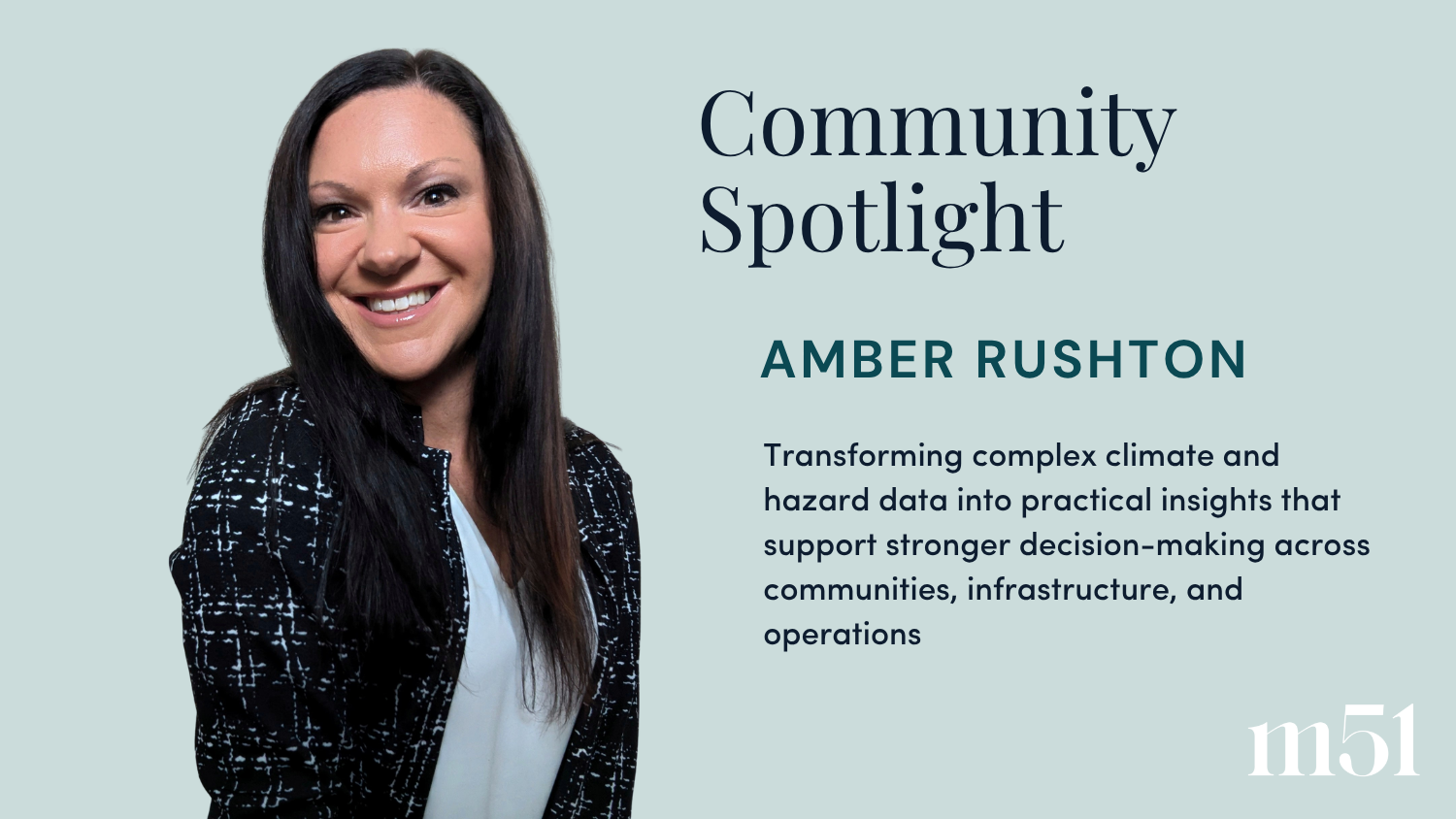
It’s a reality Amber Rushton has spent much of her career preparing for.
As Founder and CEO of Traverse Analytics, Amber works at the intersection of climate intelligence, operational resilience, and risk management, helping organizations better understand potential risks before disruption occurs. Through the company’s climate risk and hazard intelligence platform, RESILISIGHT, her team translates complex data into practical insights that support stronger decision-making and long-term resilience.
After more than two decades working in emergency management, business continuity, risk management, and operational resilience, Amber has seen firsthand how difficult it can be for organizations to make critical decisions without the right information. Whether supporting emergency operations, leading risk management initiatives, or navigating complex incidents, she repeatedly encountered the same challenge: organizations were spending too much time reacting and not enough time preparing.
That experience ultimately inspired her to launch Traverse Analytics, with the goal of helping organizations move from reactive response to proactive planning.
Turning Insight Into Action
What sets Traverse Analytics apart is the combination of advanced analytics and real-world operational experience.
Amber isn’t approaching risk from a purely technical perspective. She has spent years working in environments where critical decisions are made under pressure and understands the realities organizations face when responding to rapidly changing situations. As a result, the company’s focus extends beyond generating data. The goal is to deliver information that leaders can actually use.
Over the past year, that approach has gained significant traction.
Traverse Analytics has secured six strategic partnerships, generated early revenue through competitive bids and private-sector engagements, and received $135,000 in non-dilutive funding to accelerate development. The company has also completed the Movement51 and Trade Accelerator programs and recently joined Avatar Innovations’ Venture Accelerator.
At the same time, the team has continued validating its technology in real-world environments. Working alongside vulnerable communities, including First Nations partners, Traverse Analytics has applied RESILISIGHT in high-risk settings where resilience planning can have meaningful impacts on safety and preparedness.
One of the company’s most significant achievements has been translating complex predictive models into practical action. Through its work, Traverse Analytics has demonstrated predictive wildfire modelling with up to 97 per cent accuracy while helping organizations identify and prioritize mitigation measures that can directly reduce risk exposure.
For Amber, success is not measured by the sophistication of the technology alone, but whether that technology helps people make better decisions.
Looking Beyond the Hazard
As the climate risk landscape evolves, Amber believes organizations need to think differently about resilience.
While advances in climate science and hazard intelligence have created access to unprecedented amounts of data, information alone is not enough. The real challenge is understanding what that information means for people, assets, operations, and communities.
Amber is particularly interested in the growing recognition that risk is not experienced equally.
Disasters often have the greatest impact on those with the fewest resources, whether because of geography, infrastructure gaps, socioeconomic factors, or limited access to support systems. As a result, she sees an important shift taking place across the sector, with organizations increasingly looking beyond hazards themselves to better understand vulnerability and community impacts.
For Amber, resilience planning must account for both.
“It’s not enough to model the hazard,” she says. “We need to understand who is most at risk, what systems will fail, and what the cascading impacts will be across communities.”
That perspective is helping shape how Traverse Analytics approaches its work. By combining climate intelligence with operational decision-making and community realities, the company aims to support not only safer organizations, but more resilient communities as well.
What’s Next for Traverse Analytics
The next chapter for Traverse Analytics is focused on growth.
The company is expanding its presence beyond Canada through engagements in Europe and the United Arab Emirates, where conversations around climate resilience, smart infrastructure, and operational readiness continue to accelerate. Amber sees significant opportunities in sectors where safety, continuity, and risk intelligence are deeply connected, including critical infrastructure, energy, utilities, transportation, and smart cities.
At the same time, the company continues to advance its paid pilot and SaaS growth strategy, allowing organizations to test and validate the platform in real-world environments before expanding into longer-term partnerships.
For Amber, the opportunity extends beyond any single market. As climate risks continue to evolve, organizations around the world are searching for ways to move beyond awareness and toward action. Helping them bridge that gap is where she believes Traverse Analytics can have its greatest impact.
Lessons in Leadership
Like many founders, Amber has received plenty of advice throughout her entrepreneurial journey. Looking back, however, the lesson that stands out most is surprisingly simple.
She wishes she had trusted her gut sooner.
“When you’re starting out, there’s a lot of noise,” she says. “You’re constantly receiving advice, opinions, and perspectives from people who all genuinely want to help, but not all of it is right for you or your business.”
Over time, she learned that leadership requires a balance between seeking guidance and trusting your own judgment. Strong advisors, partnerships, and ecosystems can accelerate growth, but founders ultimately need the confidence to make decisions aligned with their own vision.
That same philosophy shapes the advice she offers to other women founders. First and foremost, she wants women to know they belong.
“There can be moments where you question yourself, especially in high-pressure environments like fundraising or scaling a business,” she says. “But it’s so important to believe in your expertise and trust your instincts.”
She encourages women to speak with confidence, advocate for their ideas, and resist the temptation to wait for permission before acting. Just as importantly, she believes founders should be intentional about the people they choose to surround themselves with. The right partners, advisors, investors, and collaborators will amplify strengths and support growth rather than create doubt.
Amber is also quick to challenge the notion that entrepreneurship follows a clear roadmap. In her experience, building a company is often messy, iterative, and uncertain. Founders are constantly making decisions with incomplete information, adapting in real time, and learning as they go. Success comes less from having all the answers and more from the ability to navigate ambiguity while staying grounded in a larger vision.
Throughout her career, one principle has remained constant: remember who you are and stay true to your values.
For Amber, leadership is rooted in integrity, empathy, and a genuine commitment to the people and communities she serves. As Traverse Analytics continues to grow, those values remain both her foundation and her compass.